
Ethiopian Habesha Dress AI Prompts: 10 Habesha Kemis Portrait Ideas

Portrait prompts for the Habesha kemis — hand-woven white cotton, colourful tibeb borders and the netela shawl.

Illustrative cover artwork for Ethiopian Habesha Dress AI Prompts: 10 Habesha Kemis Portrait Ideas

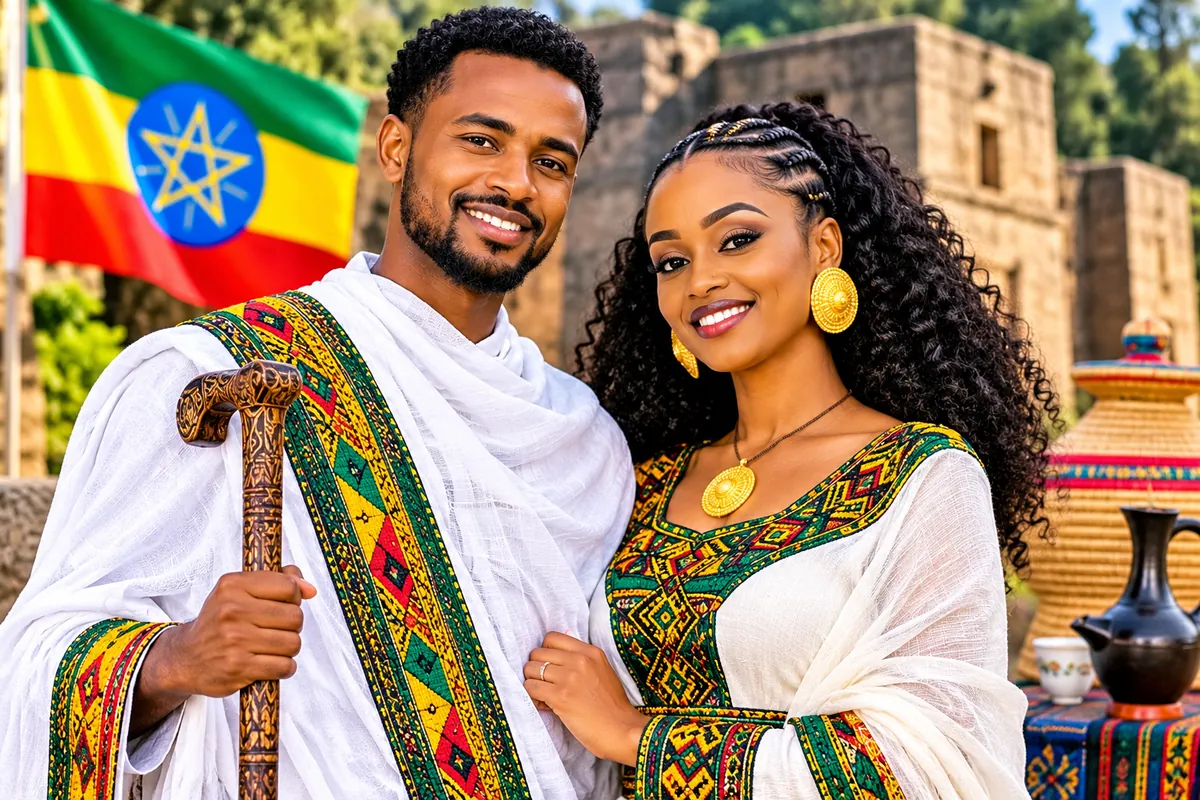
The Habesha kemis is the traditional dress worn by many women in Ethiopia and Eritrea. It is usually made of hand-woven white or off-white cotton (often called shemma) and decorated with tibeb — woven or embroidered borders in colourful geometric patterns along the hem, cuffs and down the front.

It is worn for holidays such as Ethiopian New Year (Enkutatash) and Meskel, for church, weddings and family celebrations. These prompts aim to capture the lightness of the cotton and the precision of the tibeb.

In this article
  1. Key details of Habesha attire
  2. How to use these prompts
  3. The 10 prompts
  4. Photography tips
  5. Frequently asked questions

Key details of Habesha attire

A netela — a thin, gauzy cotton shawl with a tibeb edge — is often worn over the shoulders or head. Men may wear a white cotton shirt and trousers with a gabi or netela-style shawl. Modern designers also make Habesha dresses in coloured fabrics and with metallic tibeb, which are popular for weddings.

To keep the AI accurate, describe the cotton as 'light, slightly translucent hand-woven cotton' and the tibeb as 'a woven geometric border' and give its colours.

How to use these prompts

  1. Choose a sharp, well-lit photo where your face is clearly visible (front-facing works best).
  2. Tap Copy prompt — or tap ChatGPT, Gemini or Grok to copy the prompt and open that tool in one step.
  3. In the AI tool, start a new chat, upload your photo, then paste the prompt (long-press → Paste on mobile, Ctrl/⌘+V on desktop) and send.
  4. Not quite right? Reply with a short correction, e.g. “keep my face exactly the same and make the background darker”.

AfroPrompt does not generate images and never sees your photos — everything happens in the AI tool you choose. Image features, limits and availability differ by tool, plan and country, and change often. Always check that tool's own terms and privacy settings before uploading photos of yourself or others.

The 10 prompts

Illustrative placeholder artwork for the Classic Habesha Kemis Portrait promptSample soon
#1

Classic Habesha Kemis Portrait

A serene portrait in white cotton with a colourful tibeb border.

Use the uploaded photo as the reference for the person's face and identity. Keep their facial features, skin tone, face shape, hairline and expression natural and unchanged. Create a half-length portrait of the woman wearing a traditional Habesha kemis of light, hand-woven white cotton with a wide woven tibeb border in emerald, gold and red running down the front and along the cuffs, and a thin netela shawl over her shoulders. Hair in neat shuruba braids. Soft daylight, cream backdrop, eye-level 85mm framing, serene gentle smile. Photorealistic, high resolution, natural skin texture, realistic fabric and lighting detail, no text, logos or watermarks.

Copy & open in:

Illustrative placeholder artwork for the Netela over the Head promptSample soon
#2

Netela over the Head

A soft, reflective portrait with the netela draped over the hair.

Use the uploaded photo as the reference for the person's face and identity. Keep their facial features, skin tone, face shape, hairline and expression natural and unchanged. Create a close-up portrait of the woman with a gauzy white netela shawl draped lightly over her head and shoulders, its narrow gold-and-blue tibeb edge framing her face. Gentle window light from the left, warm neutral background, head-and-shoulders crop, quiet reflective expression, fine detail in the translucent cotton. Photorealistic, high resolution, natural skin texture, realistic fabric and lighting detail, no text, logos or watermarks.

Copy & open in:

Illustrative placeholder artwork for the Enkutatash New Year Portrait promptSample soon
#3

Enkutatash New Year Portrait

A festive New Year portrait with yellow flowers.

Use the uploaded photo as the reference for the person's face and identity. Keep their facial features, skin tone, face shape, hairline and expression natural and unchanged. Create a festive Ethiopian New Year (Enkutatash) portrait of the person in white Habesha attire with a bright tibeb border, holding a small bouquet of yellow meskel daisies. Outdoor setting in a green hillside meadow with the same yellow flowers. Bright morning light, eye-level medium shot, joyful celebratory mood. Photorealistic, high resolution, natural skin texture, realistic fabric and lighting detail, no text, logos or watermarks.

Copy & open in:

Illustrative placeholder artwork for the Habesha Couple Portrait promptSample soon
#4

Habesha Couple Portrait

A coordinated couple portrait in traditional white attire.

Use the uploaded photo as the reference for both people. Keep each person's facial features, skin tone, face shape and hairline exactly as in the photo — do not swap, merge or alter their identities. Create a portrait of the couple in coordinated Habesha attire: she wears a white kemis with a gold and royal-blue tibeb and a netela; he wears a white cotton shirt with matching tibeb trim at the collar and a draped shawl. They stand together in a garden with olive trees. Soft late-afternoon light, eye-level medium-wide shot, warm content expressions. Photorealistic, high resolution, natural skin texture, realistic fabric and lighting detail, no text, logos or watermarks.

Copy & open in:

Illustrative placeholder artwork for the Modern Metallic Tibeb Gown promptSample soon
#5

Modern Metallic Tibeb Gown

A contemporary wedding-guest gown with metallic embroidery.

Use the uploaded photo as the reference for the person's face and identity. Keep their facial features, skin tone, face shape, hairline and expression natural and unchanged. Create an elegant portrait of the woman in a modern Habesha-inspired gown of soft off-white chiffon with a wide metallic gold tibeb panel down the front and at the sleeves, and a matching sheer cape. Background: softly lit reception hall with warm bokeh. Flash with ambient fill, three-quarter-length, glamorous poised look. Photorealistic, high resolution, natural skin texture, realistic fabric and lighting detail, no text, logos or watermarks.

Copy & open in:

Illustrative placeholder artwork for the Coffee Ceremony Hostess promptSample soon
#6

Coffee Ceremony Hostess

A warm lifestyle scene around the traditional coffee setting.

Use the uploaded photo as the reference for the person's face and identity. Keep their facial features, skin tone, face shape, hairline and expression natural and unchanged. Create a warm lifestyle portrait of the woman in a white Habesha kemis seated on a low stool beside a traditional jebena clay coffee pot, small handle-less cups on a tray and fresh grass scattered on the floor, light smoke from incense nearby. Soft light from a window, eye-level medium shot, welcoming smile, authentic homely atmosphere. Photorealistic, high resolution, natural skin texture, realistic fabric and lighting detail, no text, logos or watermarks.

Copy & open in:

Illustrative placeholder artwork for the Shuruba Braids Beauty Shot promptSample soon
#7

Shuruba Braids Beauty Shot

A close-up celebrating traditional braided hairstyles.

Use the uploaded photo as the reference for the person's face and identity. Keep their facial features, skin tone, face shape, hairline and expression natural and unchanged. Create a close-up beauty portrait of the woman with neat shuruba braids close to the scalp, wearing a white kemis with a fine tibeb neckline and small gold cross-pattern earrings. Warm beige backdrop, soft beauty lighting, three-quarter angle, natural skin texture, calm confident gaze. Photorealistic, high resolution, natural skin texture, realistic fabric and lighting detail, no text, logos or watermarks.

Copy & open in:

Illustrative placeholder artwork for the Highland Landscape Portrait promptSample soon
#8

Highland Landscape Portrait

Habesha attire against dramatic highland scenery.

Use the uploaded photo as the reference for the person's face and identity. Keep their facial features, skin tone, face shape, hairline and expression natural and unchanged. Place the person in white Habesha attire with a netela on a rocky highland ridge, layered mountains fading into mist behind. Soft overcast light, wind lifting the edge of the shawl. Wide environmental portrait from slightly below, the person in the left third of the frame, peaceful contemplative mood, natural colours. Photorealistic, high resolution, natural skin texture, realistic fabric and lighting detail, no text, logos or watermarks.

Copy & open in:

Illustrative placeholder artwork for the Men's Habesha Attire promptSample soon
#9

Men's Habesha Attire

A dignified portrait in traditional men's white cotton.

Use the uploaded photo as the reference for the person's face and identity. Keep their facial features, skin tone, face shape, hairline and expression natural and unchanged. Create a portrait of the man wearing a white cotton Habesha shirt and trousers with a narrow woven tibeb trim, and a white gabi shawl draped around his shoulders. Plain warm-grey background, side light from the right, half-length shot at eye level, calm dignified expression. Photorealistic, high resolution, natural skin texture, realistic fabric and lighting detail, no text, logos or watermarks.

Copy & open in:

Illustrative placeholder artwork for the Mother and Daughter Holiday Portrait promptSample soon
#10

Mother and Daughter Holiday Portrait

Matching traditional dresses for a family holiday.

Keep both faces from the uploaded photo unchanged. Create a holiday portrait of a mother and daughter in matching white Habesha kemis with pink and gold tibeb borders. They stand close in a bright courtyard with potted plants, the daughter leaning against her mother. Soft natural light, eye-level medium shot, warm affectionate smiles. Photorealistic, high resolution, natural skin texture, realistic fabric and lighting detail, no text, logos or watermarks.

Copy & open in:
Photography tips for better results

  • Say 'light, slightly translucent hand-woven cotton' so the dress doesn't look like heavy satin.
  • Give the tibeb its own colours and say where it runs — hem, cuffs, front panel.
  • For a holiday look, add meskel daisies (yellow flowers) or a coffee ceremony setting.
  • Shuruba braids are a classic hairstyle to pair with the kemis.

Frequently asked questions

What is tibeb?

Tibeb is the decorative woven or embroidered border on Habesha garments, typically in colourful geometric patterns.

When is the Habesha kemis worn?

It is worn for holidays like Enkutatash (New Year) and Meskel, for church, weddings and other celebrations — and increasingly as fashion.

Is the Habesha kemis only Ethiopian?

The style is shared by Ethiopian and Eritrean communities, with regional differences in pattern and cut.

Related prompt collections